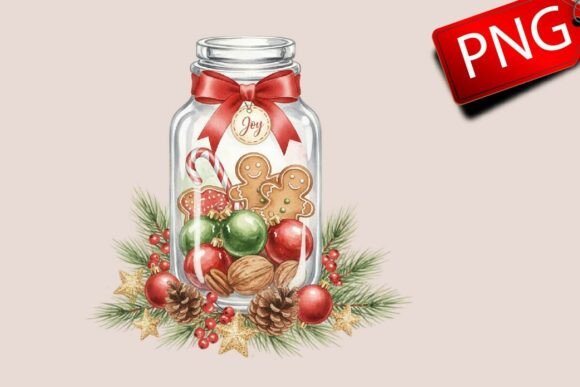
Review: Christmas Candy Cane Jar PNG for Embroidery
As a designer who spends half her life staring at stitch lines and the other half trying to sell finished goods, I don’t just look at a design file; I look at the final product. When I first pulled up the Christmas Candy Cane Jar PNG, my immediate reaction was less about the holiday cheer and more about structural viability. Does this actually translate well from a flat digital illustration into a three-dimensional stitched object? Is it going to hold up on a busy weekend at a craft fair, or will it fall apart after one wash?
This review isn’t about whether the image is cute—though it certainly is. It’s about whether it works as a machine embroidery design for real-world application. I’ve put this concept through the mental wringer of typical client requests, from personalized baby gifts to boutique tote bags, to see where this embroidery file shines and where it might need some serious tweaking.
The First Impression: Mood and Visual Personality
The Christmas Candy Cane Jar PNG carries a distinct nostalgic weight. It taps into that cozy, winter-wonderland aesthetic that sells incredibly well in December. The visual personality here is playful but structured. Unlike abstract holiday patterns that can feel chaotic when stitched, this design has a clear focal point. It feels like an illustrations category piece that has been thoughtfully composed for reproduction.
For the craft business owner, this mood is gold. It screams "giftability." When a customer sees this on a mockup, they immediately imagine it on a kitchen towel hanging by their coffee maker or as a decorative pillow on a grandmother’s couch. The theme is universal enough to appeal to hobbyists but specific enough to feel curated. It doesn’t feel generic; it feels like a personalized gift waiting to happen.
Real-World Application: Where This Design Fits Best
In my experience, not every digital asset translates equally across all mediums. Here is how I see the Christmas Candy Cane Jar PNG performing in actual production scenarios:
- Tote Bags and Market Totes: This is arguably the strongest use case. A sturdy canvas tote with this jar design centered or slightly off-center creates an instant tote bag design that looks professional. The bold lines of a candy cane jar read well against the texture of canvas, making it a perfect addition to any Etsy seller’s holiday inventory.
- Kitchen Textiles: Tea towels, aprons, and dishcloths are staples for holiday gifting. The vertical nature of a jar design fits naturally on a long tea towel. If you are creating custom apparel or home decor items, this design offers high perceived value without requiring excessive stitching time.
- Baby and Nursery Items: There is a surprising demand for non-traditional holiday baby gifts. While red and green are common, a stylized candy cane jar can work beautifully on a white onesie or a burp cloth. It softens the holiday theme, making it suitable for baby embroidery projects where parents want something festive but not overwhelming.
- Apparel and Sweatshirts: For sweatshirt embroidery, this design works best as a chest logo or a small back print. It adds a touch of whimsy to a plain crewneck. However, you have to be careful with placement. On a large garment, a tiny jar might get lost, so scaling is critical.
- Embellished Patches: If you are selling embroidered patches, this design is compact enough to fit standard patch sizes. It serves as a great standalone badge for denim jackets or backpacks, appealing to those looking for design assets that add character to everyday wear.
Technical Considerations and Stitch Clarity
This is where the rubber meets the road. As a reviewer, I have to ask: How does this hold up under the needle? The success of any embroidery project depends heavily on the balance between detail and density.
When converting this PNG to an editable format, the first thing I check is the stitch density. A candy cane jar likely involves curved shapes and possibly striped details. If the stripes are too thin, they may merge together during stitching, turning into a muddy blob rather than distinct red and white lines. You need to ensure that the satin stitch edges are clean and that the fill stitch areas aren’t so dense that the fabric pucks.
I also recommend testing the thread colors carefully. Red can sometimes appear orange or pink depending on the lighting and thread brand. White thread on a dark background requires a high-quality stabilizer to prevent show-through. If you are working with dark fabric, consider using a cut-away stabilizer to maintain structure, especially if the design includes running stitch details that need to lie flat.
Where to Use Caution
No design is perfect for every surface. There are specific situations where the Christmas Candy Cane Jar PNG might struggle:
- Small Hoop Sizes: If you are trying to fit this into a 4x4 hoop or smaller, you may lose critical detail. Tiny text or fine lines on the jar label might become illegible. Always test in your smallest intended hoop size before committing to production.
- Textured or Stretchy Fabrics: Jersey knits, ribbed cuffs, or heavy tweed can distort the shape of the jar. On stretchy fabrics, the design may warp unless you use a strong tear-away or cut-away stabilizer. On textured fabrics, the stitches might not sit flush, leading to a rough finish.
- Curved Surfaces: Caps and hats present unique challenges. A cylindrical jar design might look distorted when wrapped around the curve of a baseball cap. It often works better as a flat applique or a simplified version placed on the front panel.
- Frequent Washing: If this is for a kitchen towel or apron that will be washed frequently, ensure the design has adequate underlay stitching to prevent shifting. Poorly stabilized designs can unravel or shift over time, damaging the reputation of your small shop product.
Designer Notes for Production
To get the most out of this digital embroidery file, I suggest following these practical steps:
- Test on Scrap Fabric: Never run a new design directly onto your final product. Test it on a scrap of the same fabric and color to check for puckering, thread breaks, or color mismatches.
- Check Contrast: View your design in black and white mockups. Sometimes colors that look good on screen lose their definition when stitched. Ensure there is enough contrast between the red candy canes and the white jar (or vice versa) to maintain visual clarity.
- Verify Licensing: Before listing this as a commercial embroidery item, double-check the license terms. Some Illustrations are for personal use only. Even if you buy the PNG, you need explicit permission to sell the physical embroidered goods created from it.
- Inspect Small Details: Zoom in on the original PNG. Are there tiny elements that won’t survive the digitization process? Simplify if necessary. A cleaner design often looks more professional than a cluttered one.
Final Verdict
The Christmas Candy Cane Jar PNG is a solid, marketable asset for any designer looking to capitalize on the holiday season. It strikes a good balance between festive charm and design simplicity. It works exceptionally well on textiles like totes, towels, and sweatshirts, offering a high return on investment for minimal stitching complexity.
However, its success depends entirely on execution. Pay attention to your stabilizer choice, monitor your stitch density, and always prioritize fabric compatibility. If you treat it with the respect a professional embroidery project demands, this design can become a standout item in your handmade product lineup. It’s not just a picture; it’s a blueprint for a successful seasonal sale.