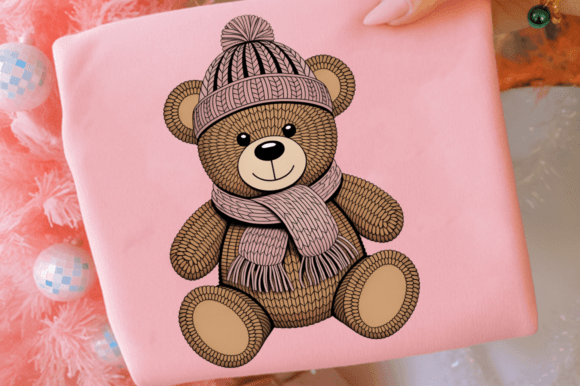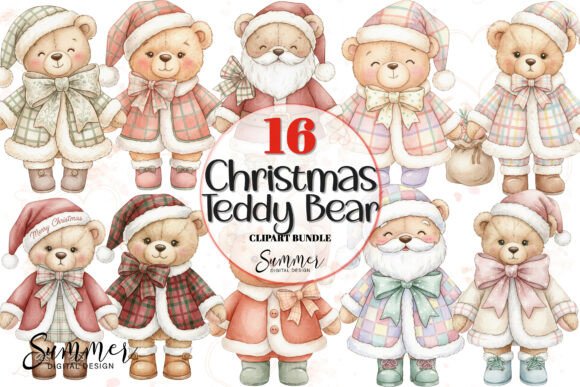
Festive Christmas Teddy Bear Clipart Illustrations
As a brand designer who has spent years refining visual identities for local enterprises, I approach every graphic design asset with a critical eye. When I first pulled up the Festive Christmas Teddy Bear Clipart, my immediate reaction was one of warm recognition. It does not scream for attention; instead, it invites the viewer in. The mood is undeniably cozy, evoking the kind of nostalgia associated with holiday mornings, handmade gifts, and quiet moments of connection. For a small business owner or a local brand manager, this specific illustration suggests a personality that is friendly, approachable, and deeply rooted in tradition. It feels less like a corporate logo and more like a cherished family heirloom, which is precisely the emotional resonance many boutique brands strive to achieve.
This asset is particularly well-suited for businesses that want to project a soft, festive, and decorative aesthetic. Whether you are running a handmade soap business, a local bakery specializing in seasonal treats, or a boutique clothing store offering holiday gift sets, this teddy bear provides a central character that can anchor your visual language. It bridges the gap between playful and premium, making it versatile enough for both children’s product lines and adult-focused lifestyle brands that appreciate whimsy without sacrificing sophistication.
Real-World Application: From Sketch to Shelf
To understand the true value of this Festive Christmas Teddy Bear Clipart, imagine we are working on a rebranding project for a local artisanal candle company launching a winter collection. The goal is to create packaging that stands out on crowded retail shelves while maintaining an elegant, cohesive brand identity. Here is how this illustration transforms from a simple image into a powerful branding tool.
In packaging design, this clipart serves as an excellent focal point. Instead of relying on generic snowflakes or abstract patterns, the teddy bear adds a narrative element. Consumers connect with characters. By placing this illustration on a matte black box with gold foil accents, the contrast creates a striking visual hierarchy. The bear becomes the hero, drawing the eye immediately, while the typography supports the message rather than competing with it. This is crucial for product label design, where clarity and appeal must coexist.
Beyond physical packaging, this asset extends seamlessly into digital touchpoints. For social media graphics, the teddy bear can be isolated and used in carousel posts announcing new arrivals or holiday promotions. Its clean lines and distinct shape ensure it remains recognizable even at smaller sizes on mobile screens. In web design, it can serve as a decorative element in website banners, adding warmth to the homepage during the holiday season without overwhelming the user interface. This consistency across physical and digital mediums strengthens small business branding, ensuring that customers recognize your brand whether they see it on a shelf or on Instagram.
Elevating Business Presentation and Trust
Investing in high-quality design assets like this teddy bear illustration directly impacts customer perception. A stronger first impression is often the difference between a browse and a purchase. When your marketing visuals look polished and intentional, it signals professionalism and care. Customers subconsciously associate the quality of your packaging with the quality of your product. If your product mockup features a charming, well-integrated teddy bear, it suggests that you have paid attention to detail. This builds customer trust and fosters an emotional connection that generic clipart simply cannot replicate.
Furthermore, this asset supports better visual hierarchy. In complex layouts involving ingredient lists, barcodes, and legal disclaimers, having a strong graphical element helps guide the eye. The teddy bear can act as a container for text or a separator between sections, making information easier to digest. This is especially important for editorial design elements within your brand materials, such as catalogues or lookbooks, where readability and aesthetics must balance perfectly.
Strategic Placement for Maximum Impact
While this illustration is versatile, its effectiveness depends on strategic placement. It works best when given breathing room. Consider using it as a hero graphic on your primary holiday landing page or as the main emblem on gift boxes. It is also ideal for hang tags and thank-you cards included in orders, adding a personal touch that encourages repeat business. For seasonal packaging, integrating the teddy bear into the overall pattern or border design can create a cohesive look that ties your entire product line together.
Additionally, this asset shines in promotional banners and flyers. Its festive nature makes it perfect for announcing limited-time offers or holiday events. In boutique visuals, such as window displays or in-store signage, a large-scale version of the teddy bear can create an inviting atmosphere that draws foot traffic. For printable design products, such as planners or journals sold by creative entrepreneurs, this clipart adds a seasonal flair that customers love to collect.
Avoiding Common Design Pitfalls
However, no single asset is suitable for every context. There are scenarios where the Festive Christmas Teddy Bear Clipart should be used with caution. It is generally not appropriate for formal corporate branding or industries that require a strictly serious tone, such as legal services or medical facilities. Similarly, if you are designing for a luxury minimalist brand, the whimsical nature of the bear might clash with the desired aesthetic of understated elegance.
Technical considerations are equally important. Avoid placing this illustration on low-contrast backgrounds where it may lose definition. Be wary of using it in crowded product packaging where it might compete with essential text or other graphical elements. If your layout is already dense with information, such as a supplement label with extensive nutritional data, adding a character illustration can clutter the design and reduce readability. In these cases, it is better to use simpler geometric shapes or subtle textures.
Practical Designer Notes for Implementation
Before finalizing any designs, there are several technical checks every brand designer should perform. First, always test the asset on real product mockups. Digital screens render colors differently than printed materials, so seeing how the teddy bear looks on actual paper stock, plastic, or fabric is essential. Check how it performs in black and white, as some printing processes may rely on monochrome outputs.
Preview the illustration at the exact size it will appear on your final product. What looks impressive on a desktop monitor may become indistinct on a tiny product label. Ensure the resolution is sufficient for high-quality printing to avoid pixelation. If available, inspect the file format. An SVG design offers scalability and editability, allowing you to adjust colors to match your brand palette precisely. A PNG design with transparency is useful for quick placements but lacks the flexibility of vector files.
Typography pairing is another critical factor. Test the teddy bear alongside various font styles. It pairs beautifully with serif fonts for a classic, elegant feel, or with handwritten fonts for a more personal, rustic vibe. Avoid pairing it with overly aggressive display fonts that might create visual conflict. Finally, and most importantly, confirm your commercial license. Using this asset for client work, business branding, or physical product sales requires proper rights. Always review the terms of the creative marketplace or platform where you acquired the clipart to ensure compliance. Ignoring licensing can lead to legal issues and damage your brand’s reputation.
In conclusion, the Festive Christmas Teddy Bear Clipart is more than just a cute image; it is a strategic tool for enhancing professional branding. When used thoughtfully, it can elevate your local business presence, create memorable marketing visuals, and build lasting connections with your audience. By understanding its strengths and limitations, you can integrate this illustration into your brand identity with confidence, ensuring your products stand out in a competitive market.